
Episode 2: Anita and Tiago begin transforming a passionfruit monoculture into a diverse, layered food forest using syntropic farming and agroforestry — building biodiversity, soil health, and long-term resilience.

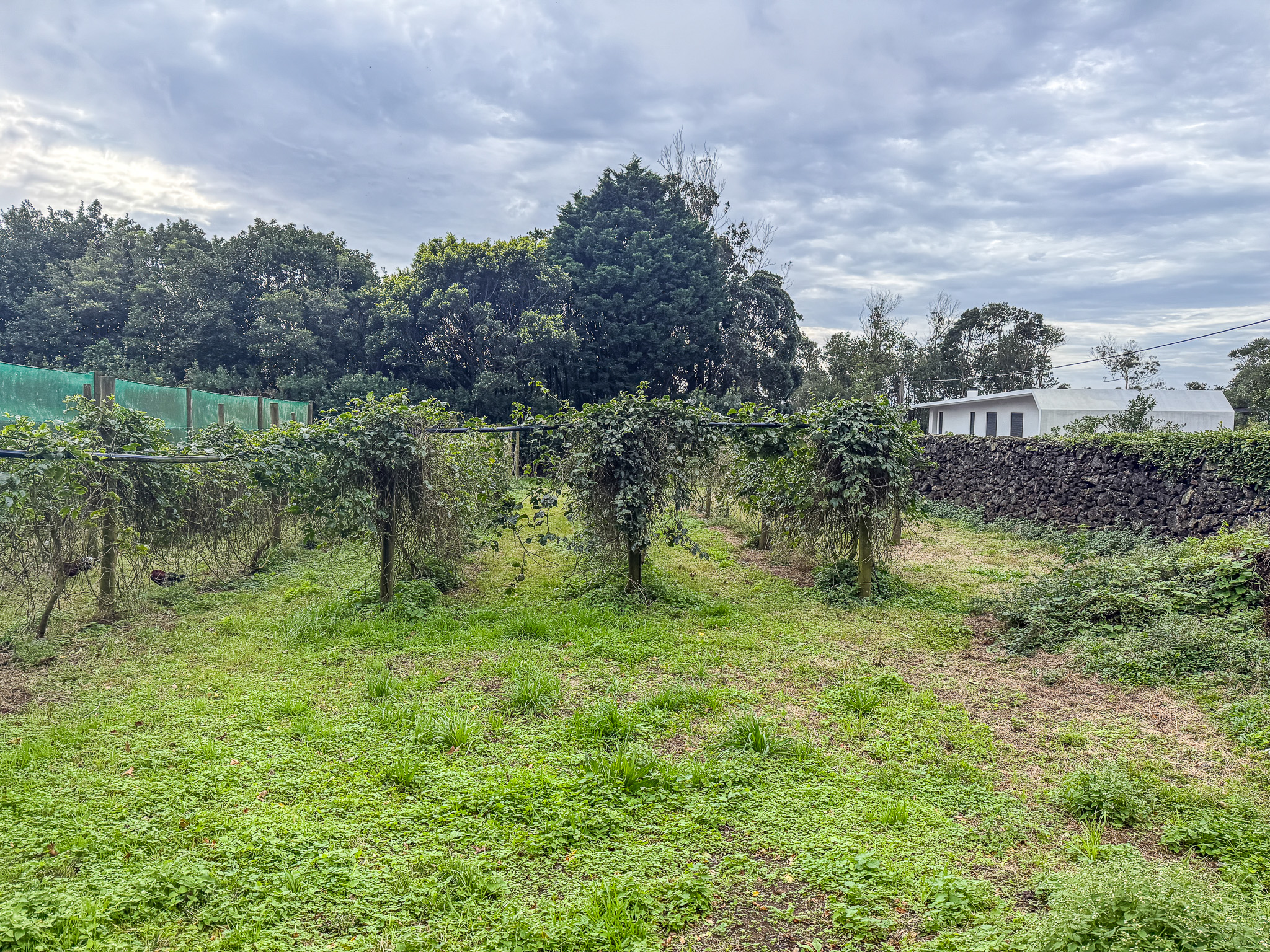
A monoculture is a system that grows one thing, very efficiently, and depends entirely on outside inputs to keep going. Fertilizer, irrigation, pesticide, labor — pull any of them away and the whole thing falters. A food forest works the opposite way. It's a layered ecosystem where complementary plants and trees support each other, build soil, and need less from us over time. In Episode 2, we begin the work of turning a passionfruit monoculture into something living.
Syntropic farming is the practice of growing food the way a forest grows itself. Instead of planting one crop in clean rows and fighting everything else off, you plant in layered groupings — what practitioners call cells — where each species has a role. Some fix nitrogen. Some create shade. Some build soil through their leaf drop. Some are the crop you harvest. Together they form a small, self-supporting unit that mimics the natural succession a forest would go through on its own.
The redesign we're starting in Episode 2 uses these cells as repeating units. Passionfruit stays — it's the income crop, and it's well-suited to the climate. But around each passionfruit vine, we're planting companion species that protect the soil, increase biodiversity, and improve fertility year over year. Over time, the field stops looking like a passionfruit farm with extras and starts looking like a food forest where passionfruit is one of many things growing.
"You stop managing a crop and start managing an ecosystem."
Regenerative work doesn't reward the impatient. The first two or three years of a syntropic system go into setup — planting, pruning, learning how the cells behave in your specific climate, watching what thrives and what needs to be swapped out. The yields in those early years are modest. The biomass we're cutting and laying down as mulch matters more, in the long run, than the fruit we're picking.
That's the trade. We give the system time, and the system starts giving back without needing as much from us. Soil that was thinning under monoculture begins to deepen. Insects and birds that were absent start to show up. The passionfruit itself grows stronger because it's no longer the only thing the soil is being asked to support.
.jpg)
Every cell we plant now is meant to be more abundant in five years than it is today, and more abundant in ten than it is in five. That's the test of regenerative work — not what the field looks like at the end of the season, but what it looks like at the end of the decade. We're not optimizing for this year's harvest. We're optimizing for a farm that, by the time guests are walking through it on tours and cooking from it in our kitchen, has the kind of layered abundance you can't buy or shortcut.
If you're following along, Episode 2 is where the theory hits the ground. There's a long way to go, but the first cells are in.
Watch Episode 2 above to see how the redesign starts on the ground. Subscribe to our YouTube channel to follow the transformation.